
Geen categorie @en
Efficient and hygienic garment management with FIFO in dispensing machines

In industries where hygiene, convenience and operational efficiency are essential, garment dispensing machines offer a smart solution. By applying the FIFO principle (First In, First Out) to garment distribution, organisations improve inventory control as well as the quality and availability of workwear. This blog outlines the benefits of the FIFO approach and its added value…
Read MoreSustainability in the laundry industry: 10 ways to reduce, reuse and recycle

The industrial laundry sector is increasingly expected to operate in a more sustainable manner. This expectation comes not only from legislation, but also from societal pressure. Fortunately, technological innovation offers ample opportunities to redesign processes for greater efficiency and lower environmental impact. In this blog, we explore ten practical ways in which laundries can contribute…
Read MoreAlways in control of your workwear with RFID technology

In industries like healthcare, hospitality, and manufacturing, thousands of garments circulate daily. Manual tracking and inventory management are labor-intensive and error-prone. RFID technology offers an intelligent and efficient solution. Why RFID is the new standard in textile management By equipping each garment with an RFID chip, every item becomes uniquely identifiable and digitally traceable. This…
Read MoreThe hidden cost of missing workwear: how to take back control

Workwear represents a significant investment for organizations in healthcare, industry and facility services. But what happens when part of this clothing regularly disappears without a trace? Missing garments are a common yet underestimated issue that can result in substantial financial loss. Losing track of workwear: a familiar challenge Many organizations notice that the number of…
Read MoreWorkwear available anytime with automated dispensing systems

In industries such as healthcare, hospitality, and manufacturing, having workwear available at any time is essential. With irregular shifts and 24/7 operations, an automated clothing dispensing system offers a practical solution. It not only improves convenience but also enhances efficiency, hygiene, and cost control. The benefits of 24/7 workwear dispensing Always access to clean workwearAn…
Read MoreThe hygienic benefit of separating clean and soiled garments in dispensing machines
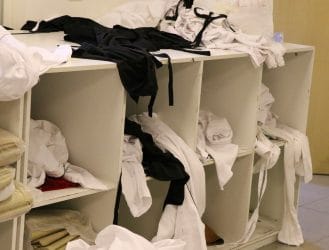
In hygiene-critical environments like hospitals, care homes and industrial facilities, the separation of clean and soiled garments in garment dispensers offers significant health and safety benefits. Preventing cross-contamination By using separate compartments for clean and soiled garments, the risk of pathogens spreading from contaminated to clean clothing is greatly reduced. Ensuring user health and safety…
Read More10 insights to reduce e-waste in the laundry sector
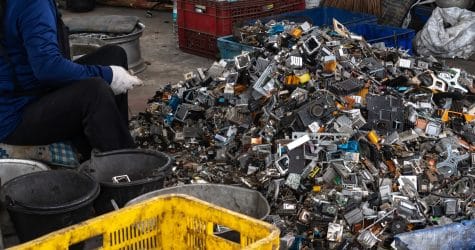
Electronic waste (e-waste) is a growing environmental concern. In the laundry industry, outdated or poorly designed electronics contribute to this problem. In this blogpost, we share 10 practical insights that help industrial laundries reduce e-waste through smarter hardware and software choices. 1. Choose modular systems Modular systems allow for individual components to be replaced, extending…
Read MoreWorkwear as a driver of safety compliance and operational efficiency

In workplaces where safety, health, and efficiency are key, workwear plays a vital role in occupational health strategies. For sectors such as food processing, manufacturing, and logistics, complying with occupational health and safety regulations is not just a legal obligation, but a practical necessity. LCT-Textilligence provides solutions that help companies meet these standards while keeping…
Read MoreOptimization of hospital garment distribution: efficiency, hygiene and cost savings

In hospitals, reliable access to clean and hygienic garments is essential. Shortages, excess stock or worn-out uniforms can impact staff performance and compromise patient safety. An optimized garment distribution system is therefore crucial. Inventory and usage insights: full control over your garment flow With an automated garment dispensing system such as the one from LCT-Textilligence,…
Read MoreIs your garments management process a complicated and unclear procedure or is it well-structured and organised?

At many organisations, garments or uniforms are mandatory. Not just in the healthcare sector or industry, but also in many other branches. First, in most cases Personal Protective Equipment (PPE) is required. Furthermore, comfortability is an important aspect for users. Last, corporate identity is important and the fact that users enjoy wearing smart uniforms. All…
Read More